
How Arrest Warrants Work in Fluvanna County
In Fluvanna County, a Virginia arrest warrant begins with sworn information and a probable-cause review by a magistrate or judge. A citizen or an officer may swear the complaint. A summons can replace it when the facts allow. Service falls to an authorized officer. The Sheriff serves criminal warrants, the clerk keeps the case and hearing record, and the court later controls the charge, the date, and the release terms.
Read Virginia Code § 19.2-72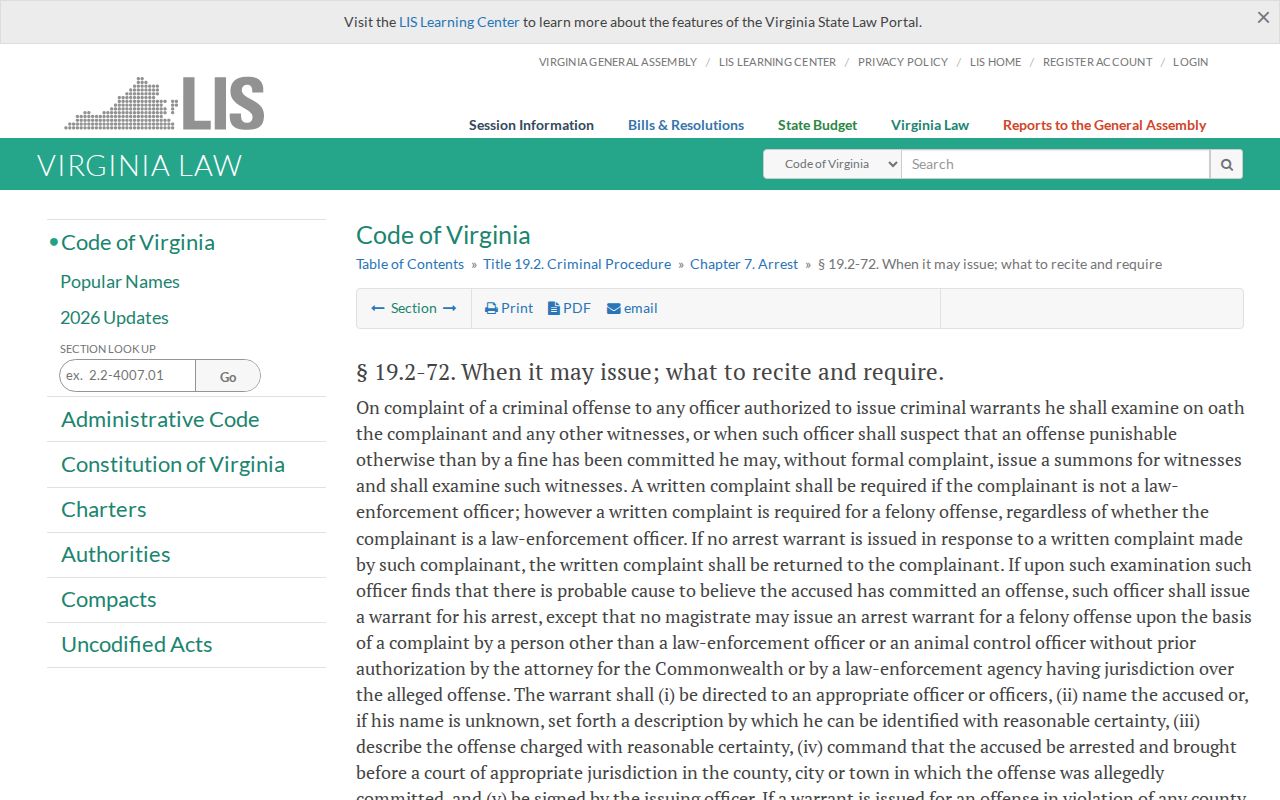
The statute lists the identifying and appearance details a warrant must carry; it creates no public active-warrant search for Fluvanna County.
Probable cause: A magistrate or judge reviews sworn facts before issuing an arrest warrant. A summons may be used when the law and facts support an appearance order instead.
Fluvanna County Arrest Warrant Complaints
In Fluvanna County, the complaint route starts at the magistrate service, not at a public warrant website. The complainant gives sworn information. The magistrate reviews it. That review decides which authorized process to issue, and the county FAQ says the choice may be an arrest warrant or a summons. The facts drive the pick. The FAQ describes the general complaint and magistrate route, not any one person's case.
Read the county's magistrate process FAQOnly after a Fluvanna County magistrate issues a lawful order does the Sheriff's role in serving the process begin.
Arrest Warrants: What They Contain
Virginia Code § 19.2-72 fixes what a Fluvanna County arrest warrant must contain: the accused's name or a reasonable description, the offense charged, a direction to arrest and appear before the proper court, and the issuing officer's signature. That is the statute's whole list. OCIS does not show every field. The table here summarizes the statute and the search help, not a sample Fluvanna warrant.
| Issuing authority | Magistrate or judge who reviews the complaint and issues process. |
|---|---|
| Accused person | Name or a reasonable identifying description in the warrant. |
| Offense | Description of the charge or alleged conduct. |
| Court appearance | Command to appear before the proper court. |
| Case number and date | May appear in the court case record; no local warrant-number format was located. |
| Bond and status | May depend on a later court or magistrate order; no universal field is guaranteed online. |
Fluvanna County Patrol Serves Arrest Warrants
Deputies in Fluvanna County do the warrant legwork. The Sheriff's Patrol Operations page has them attempting service on criminal warrants, appearing in court, transporting people to jail, and helping with magistrate access. Investigations serves legal papers as well. Outside help is possible. A joint operation can bring in Virginia State Police or another authorized agency. A February 2026 county release described the coordinated execution of a search warrant, which is a separate process from any arrest-warrant list. The Sheriff's division page lays out these service roles and the office structure, not a name or warrant roster.
Review the Sheriff's division responsibilities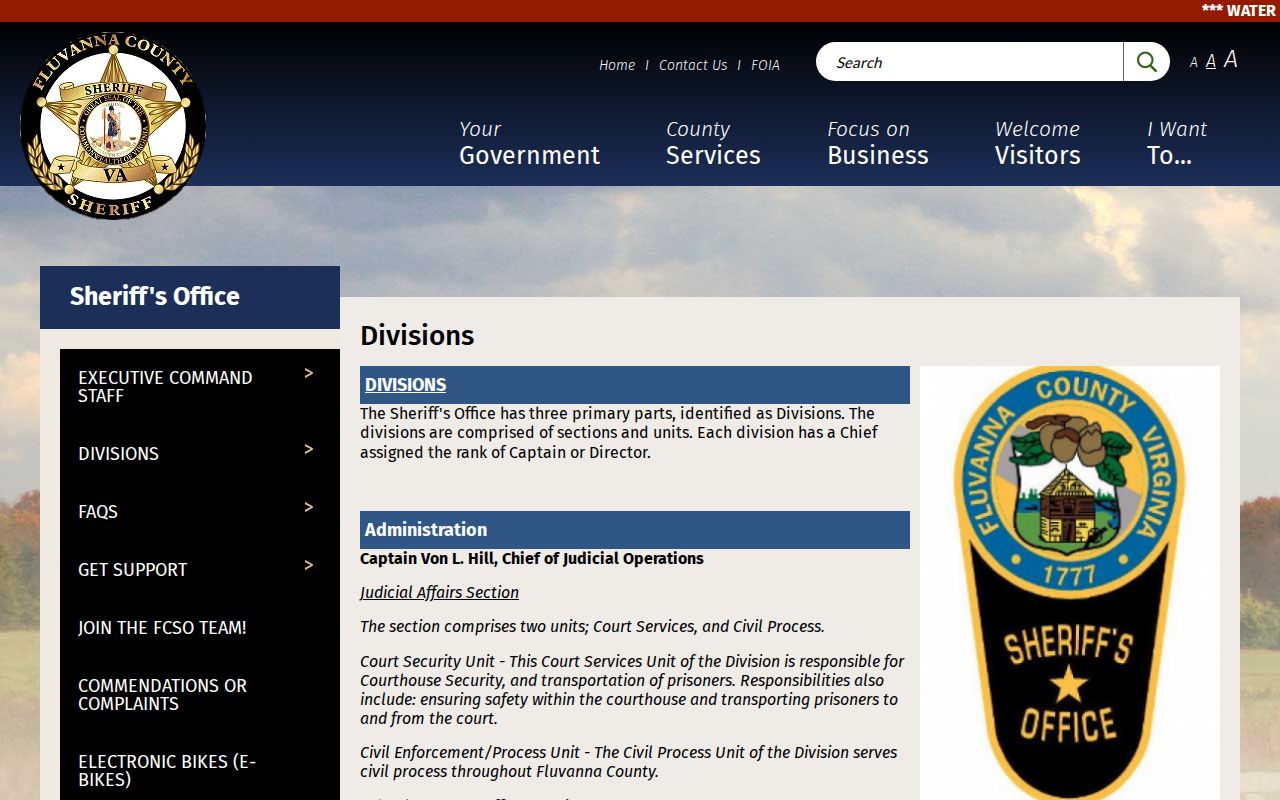
After service brings a person into custody in Fluvanna County, a magistrate weighs bail and the case moves forward in its issuing court.
How Warrants Get Served in Fluvanna County
Service, booking, bail, and court are separate steps. A deputy receives the process for service. If an arrest happens, the person may be taken to Central Virginia Regional Jail in Orange, where a magistrate takes up the bail question. The clerk logs the case. The clerk also records each hearing event. Notably, a Sheriff's service record may not display in the public OCIS case view. The regional jail is shared by Fluvanna, Greene, Louisa, Madison, and Orange. Its authority page covers the regional role only, not a public warrant lookup or bond page.
See the regional jail's public authority informationAn arrest and the charge beneath it stay distinct events in a Fluvanna County courtroom, where the court sets the next date.
Fluvanna County Jail and Bail Route
Virginia magistrates run the bail hearings in Fluvanna County cases and set release terms under the case, the law, and any court order. Central Virginia Regional Jail holds people after booking. The jail cannot recall process or resolve a charge. No countywide bond amount or universal payment method exists. The jail's own site lists its location and general information, and inmate-account deposits are not bond. Ask the magistrate, the court, or the jail which payment a release order allows.
View Central Virginia Regional Jail information
In Fluvanna County, release follows the order entered in the case, so assume no set amount or payment schedule.
Arrest Warrants, Summonses, and Bench Warrants
These three papers start cases differently in Fluvanna County. An arrest warrant follows a probable-cause review. A summons orders an appearance without an immediate arrest. A bench warrant or capias grows out of a court setting or order, and each can demand action, though only the court file shows which one applies.
| Process | Why it may issue | Where to ask first |
|---|---|---|
| Arrest warrant | Sworn complaint and probable-cause finding | Magistrate, Sheriff in person, and issuing clerk |
| Summons | Appearance order used instead of arrest process | Clerk for date, court, and instructions |
| Bench warrant or capias | Missed hearing or court-order issue | Clerk of the court that set the matter |
| Search warrant | Probable-cause request to search for evidence | Issuing court, with affidavit access limits |
A Fluvanna County search warrant targets evidence or a place, and it is no self-check on arrest status.
Fluvanna County Search Warrants Have a Separate Rule
A search warrant in Fluvanna County authorizes a search for described evidence. It is not an arrest on a name. Virginia Code § 19.2-54 governs the paperwork afterward. Affidavits and related papers become open to public access once the warrant is executed or 15 days pass after issuance, whichever comes first. A court can seal the material. Sealed papers may stay out of a public search even when a process exists. The arrest-warrant case-search path follows different rules entirely.
Read Virginia Code § 19.2-54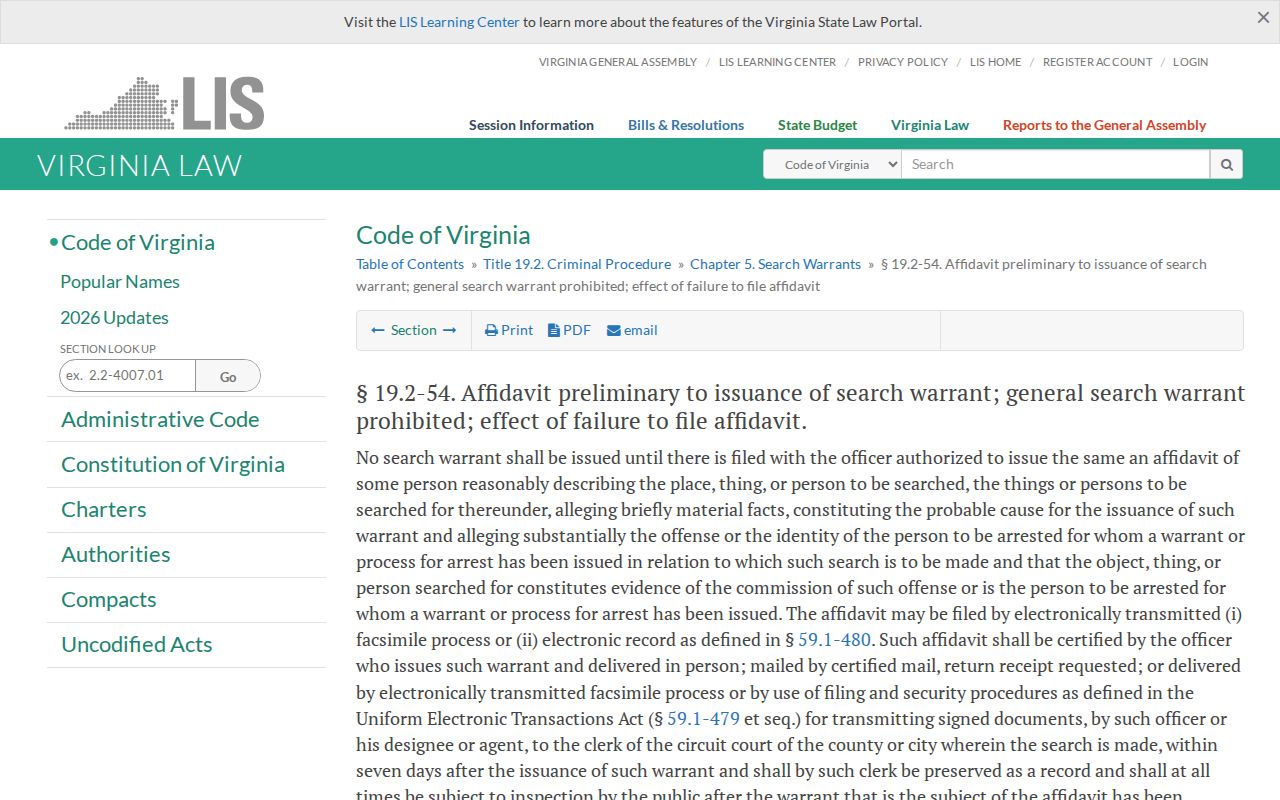
Do not treat a search-warrant release as a public active-arrest roster.
Fluvanna County Arrest Warrant Search Limits
OCIS finds a Fluvanna County case by name, case number, or hearing date. The case view may show the court, the charge, hearings, disposition, and service-of-process details. It promises no active-warrant field. No warrant number, bond amount, or execution status appears. JDR and juvenile records face added access limits on top of that. The Sheriff publishes no public active-warrant search. Search your own case first. Then contact the correct clerk; to confirm an arrest warrant, the county's rule is to visit the Sheriff's Office in person, because the office will not answer that question by phone.
Open the official Virginia OCIS searchTreat the screen as a pointer to the court, not proof that an arrest warrant is active. The Fluvanna County Warrant Check guide walks through the public case-search fields.
Handling an Arrest Warrant in Your Name
Think an arrest warrant is outstanding in your name? A Virginia attorney can confirm it and arrange an appearance. In Fluvanna County, the in-person Sheriff's inquiry is the local route, and nothing here promises a safe-surrender event, a walk-through, or a same-day release. Only the issuing court or magistrate can recall the warrant, set bail, or schedule the next hearing.
Plan first: A walk-in inquiry can lead to arrest. Get legal advice and ask the court which surrender or appearance step applies.
- Search your own case in OCIS and write down the court and case number.
- Ask the Circuit Clerk or combined clerk what hearing or filing is required.
- Speak with counsel about surrender, bond, and whether a motion is needed.
- Use the Sheriff's in-person inquiry for arrest-warrant confirmation.
- Keep the court order or receipt that shows any recall or release action.
The home page's Fluvanna County resolution steps show how the clerk, Sheriff, and court roles fit together.
Fluvanna County Arrest Warrant Records
A records request works best when it names the case number, the court, a date range, and the type of record sought. In Fluvanna County, the clerk may hold case, hearing, and filing entries, while the Sheriff may hold service or arrest records. Ask for a cost estimate first. Some sealed, juvenile, and active-investigation records stay closed to the public. When the case is federal or from another state, the local clerk is not the issuing authority; go through that jurisdiction or your counsel instead.
Fluvanna Sheriff's Office
Arrest-warrant service and in-person confirmation
(434) 589-8211